
 |
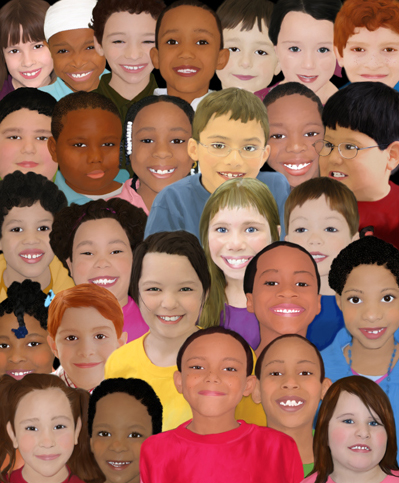
| This is an illustration I was commissioned to design a while back for a Tolerance and Diversity article. |
This morning I woke up earlier than usual and left my house in the veil of darkness- well before my children departed for school- so that I could sit through a boring three hour diagnostic test (a story for another time). I brought a book to pass the time; but, I was too distracted by the noise of the television in the room we were sequestered in to absorb anything I was reading My interest, instead, was piqued by a story about parents in a school in Edgewater, Florida who are shunning a 7 year old girl with a severe peanut allergy because her health issue requires their children to take extra precautions like washing their hands twice a day upon entering the classroom. These parents brazenly accuse that the school, in accommodating the girl's health issues, is stripping away the rights of the other students. And they want the girl removed from the classroom and home schooled rather than bend to protect the health of one child. I do not normally use my writing as a way to promote a social or political agenda; but, listening to the utter ignorance and selfishness of the protesting parents makes me go into anaphylactic shock. This idea of Peanut Free Classrooms is not new to my family. Years ago, my children's early childhood center/ elementary school became a PEANUT FREE ZONE in order to protect the growing number of students who had severe peanut allergies. At the time, our compassionate principal (who also happens to be my beautiful, wonderful, talented Aunt Liz), faced the backlash of ill informed and unsympathetic parents. I wrote the following "editorial" on October 15, 2004; but, it still coveys how I feel today.
Peanut butter and peanut products are not necessary for our continued existence, contrary to what many picker eaters will attest. But, for some children, the absence of peanut products is the key to their health and survival. Widespread and fatal peanut allergies are the reasons pediatricians recommend that peanuts be one of the last foods to be introduced to our babies’ vulnerable immune systems. And this is also the reasoning behind the controversial decision by administrators at The Dr. George E. Blackman School of Excellence Early Childhood Center #54 in Buffalo, where 10 students suffer severe allergies to peanuts, to become a “Peanut Controlled” environment. This means that all lunches and snacks entering the school are subject to inspection and scrutiny for peanut products. If a food item is questionable, it is sent home, sealed.
As a parent of two children attending ECC#54, I am so grateful to the administration for proving once again that the best interest of all children is the school’s first priority. The pronouncement of a Peanut Controlled School has been met with very strong oppositional emotions. I am fortunate that my children do not have food allergies and I am sympathetic to the aggravation of parents who have children who will only eat peanut butter and jelly sandwiches (in 1st and 2nd grade, my oldest son would only eat cereal and milk). But, I think that many are missing a great opportunity to introduce or redirect their children to more effective sources of protein such as milk, cheese, roasted beef or chicken (not processed). Peanut butter is a very cheap, incomplete source of protein and is often loaded with fat and sugar.
But there is a greater lesson to be learned here, a valuable experience in compassion. Our children are learning to take into account the safety and security of others before their own needs and wants. They are learning acceptance and inclusion. As parents it is our inherent desire and duty to insure and nurture the best interests of our children; that means applying that same concern to the classmates who share the same learning environment as our children. Our children are not as angry about the ban as we would like to believe. They are resilient. We are the ones who choose to allow this one decision to remain a burden in our daily lives. This imposition is minor compared to the daily plight of parents of children with life-threatening allergies, who must be constantly vigilant about the dangers that go unnoticed by many. I would rather spare my children and all of their classmates the upsetting image of a friend succumbing to anaphylactic shock than pine over the few minutes I spend creating a different lunch menu. I would rather my children develop into considerate adults, learning that small sacrifices have a breadth of positive impact on the people around them than have them wonder why a friend must eat away from the others because of the very real possibility that this young life might be in jeopardy. This is more than an issue over food preference or aversion; this is a matter of life or death.
When I pick up my kindergartener from school and all of the children come out to their moms and dads bursting joyfully with facts and experiences, leaving their teacher with a goodbye hug excited for tomorrow’s adventures, I know that my children’s school is doing an amazing job at planting the seeds for life long learning. At the end of the day, the subject of the absence of peanuts has not impeded their education at all.

